



















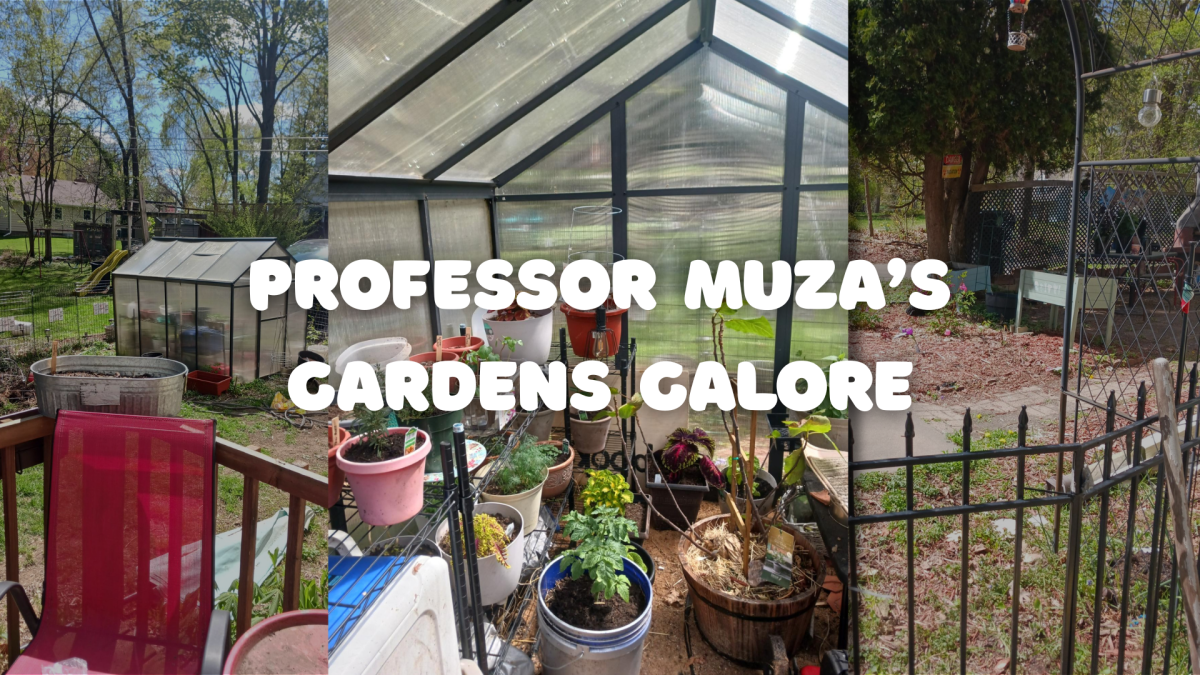







Spring has finally sprung in Menomonie, and the anticipation of summer has filled the air all around campus. Along with many other Stout students, it seems I can’t go more than 24 hours without asking or being questioned, “What are your summer plans?” While the excitement practically comes screaming out as we answer, I got to thinking about our professors and what they must be looking forward to during the next few months. With my great luck, I stumbled upon a certain professor whose summer plans are unique and, in many ways, whimsical.
Robin Muza has been a professor in Stout’s Human Development and Family Studies (HDFS) department for over 30 years. Technically retired, Robin currently teaches one course, and I have been lucky enough to be her student this semester. She is incredibly entertaining and has a personal story or experience for every topic that may come up. In the discussion of summer plans, she revealed that her excitement is rooted in her gardens. She lives with her adult daughter, who graduated with a botany minor, and the two of them share a yard of themed gardens.

Starting with a twist on a classic, Robin and her daughter have a fruit and vegetable garden! They grow many typical produce items, including four variants of lettuce. She also grows dill for her two bunnies, Miko and Dolly, to munch on. In my opinion, the most interesting fruit she grows is a cocomelon! The cocomelon fruit is in the same family as watermelon and can have a sweet, tart, or even spicy taste, making it an interesting snack or ingredient to a larger dish! Robin also has an herb garden that has come in handy with natural remedies. She has summer plans to extend this garden to include not only the common remedies, but the eccentric plants as well. As Robin said, “I want the abnormal ones!” That is most apparent with her following two gardens.
The next garden I found particularly interesting was her poison garden. While not the first person to create one, this garden is incredibly unique and brings entertainment to maintain it! She reassured that all the plants inside this garden are only poisonous when consumed, but, for safety measures, she’s included a sign that reads “do not touch” to make strangers wary of the greenery inside. She only includes plants that look beautiful despite their poisonous nature, such as foxglove and nightshade. This out-of-the-ordinary garden is what inspired me to continue my research into her backyard landscape.
Kept far away from the poison garden rests Robin’s children’s garden, which is much more predictable as an HDFS professor. Similar to a sensory garden, this bed includes all the plants that children would enjoy interacting with. She has chocolate mint and pineapple sage for the children to enjoy the smell of. For touch, she’s included soft and fuzzy plants such as lamb’s ear, which as the name suggests, is as soft as a lamb’s ear. She’s also included snapdragons for an interactive plant. This garden is being renovated, which is what she’s looking forward to most this summer. Starting after Mother’s Day, she will add a rock path lined with fairy lights and windchimes to the children’s garden. She’s also turned to her granddaughters for help in decorating the ground with rock creatures.
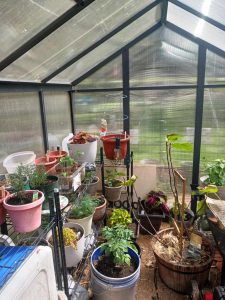
Although her goal in extending her gardens has been kept at bay until now, over the winter, she was able to plant wildflower seeds and is anticipating that garden for next year! Professor Muza also has her own greenhouse that isn’t heated during the winter, but she was able to maintain hibiscus, a fig tree, and a lemon tree in the off-season. While not all of us have a natural green thumb, I hope this article encourages you to stay kind to your professors during finals week. After all, they may be counting down the hours to summer as well.