



















Under the lowlights of the Harvey Hall’s theater, a substantial crowd has gathered. The audience nearly fills up the space, hosting a mix of students, staff, and community members alike. It’s an impressive turnout for any on-campus event, much less a panel humbly titled Trauma and Tragedy, and surprisingly pleasant. Chatter, laughter, and a sense of belonging subtly floats through this space, warm and inviting.
Dr. Chris Freeman, a history professor here at Stout, acknowledges the dissonance as he begins the panel. “It’s really amazing that this amount of people would show up for an event that’s called Trauma and Tragedy! In a certain sense it feels like haven’t we had enough? But it just keeps coming on a daily basis.”
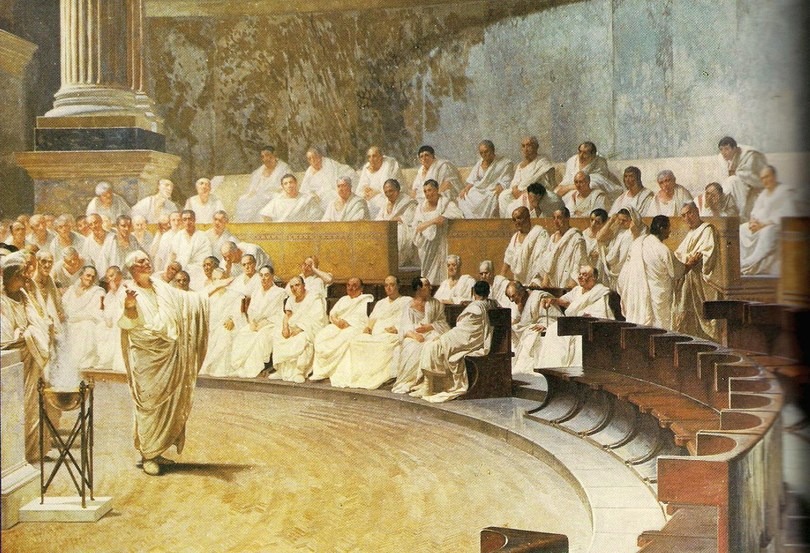
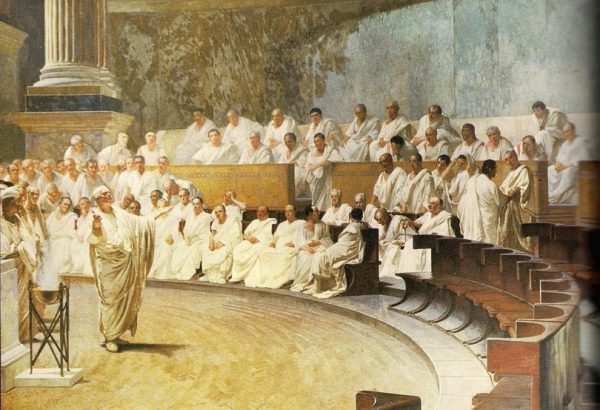
One of Freeman’s classes covers the history of Greek mythology, and he presents his sentiments about tragedy through this ancient mediterranean lens. A term possibly coined by Freeman himself, “citizening”, comes up several times in his speech as a core tenet of functioning society. He also marks the serendipity of this panel taking place in a theater, the birthplace of democracy in the ancient Greek world.
“Citizening, the participle form of citizen,” Freeman explains, “When you’re citizening, you’re participating in something that’s bigger than you are, and it’s a skill that’s learned in the theater, processed through the ideas of trauma and tragedy…Why don’t you look around and see who’s sitting next to you? Aren’t we so lucky to be here? But when you think of democracy today, we don’t think about it in the same way. We don’t think about who’s sitting next to us, who’s right next to us, the people in the room. Our politics and our media isn’t built for that.”
As Freeman brings his presentation to a close, Courtney Juelich moves us forward in time a couple thousand years. An expert in American history, Juelich compares the current political climate to that of the American revolution in 1770.
“Like how Chris finds stability in the theater, I find it in history,” she says, “What the media was in Boston at this time was a printing press, smooshing some paper on some lead lithographs… You have Paul Revere painstakingly scratching out this image of the massacre of Bostonians by the British government when they allegedly throw snowballs at the soldiers, protesting this taxation, protesting this unfair treatment, protesting this lack of liberty.”
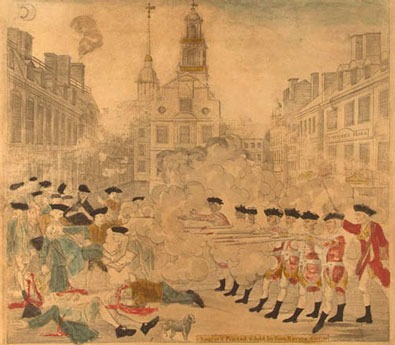
The image Juelich refers to is a famous drawing by Paul Revere and Henry Pelham. As she states, the piece was expressly created to spread news of the Boston massacre across the colonies. The drawing depicts the events as they occurred; protestors, citizens of Boston being fired upon by British soldiers who had control of the city at the time.
She continues. “This was years into the occupation of Boston, and the American revolution didn’t end for eight more years after this. It’s a long haul. I think it’s hard to be in the fray of things and not be able to look back with the gift of time to see what your work has done. You’re not gonna have it for many, many years, but this is why we fight.”
Juelich concludes beautifully, “I can’t help but see echoes to the videos that we see of Minneapolis right now. And so my lesson from Boston comes from someone hundreds of years later, the journey is long. But the arc is going to lean towards justice over time.”
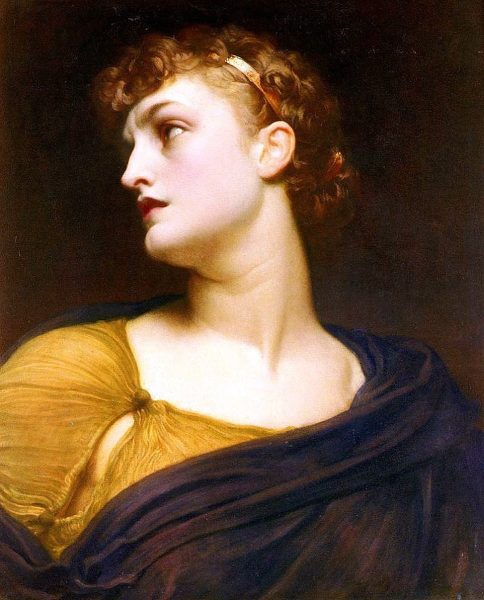
Returning to the theme of theater, and its role in healing, Dr. Lopa Basu, a professor of literature, presents a bolstering and hopeful speech on Sophocles’ Theban play, Antigone. The play has a timelessness to it, as many classical pieces do, relaying the tale of a grieving young woman who defies the King of Thebes in order to bury her brother, named a traitor by the state.
“She does it alone. From that moment she becomes a figure of civil disobedience. She represents resistance to tyranny,” says Dr. Basu. “A lot of my students seem to think that tragedy is always a downer, it really isn’t! Certainly not Antigone. I first read Antigone when I was a freshman in college in India, and I’ve taught it every year at UW Stout in my honors composition class. I have a very low boredom threshold, I’m constantly switching up my courses. This is the only text that I’ve taught for twenty one years. Why do I keep returning to it? I think it gives me hope. Antigone is a figure of hope because ultimately what happens in the play is reversal and recognition. Those things signal the limits of tyranny. Tyranny is not going to be forever, it’s limited.”
Our remainder of the panel is made up by Kamran, an officer of TRIO services, Yutika, a poet and resident advisor, and Chris, vice president of the Stout Student Association. All three carry a palpable sense of duty to this community and a willingness to stand up for their fellow students. Their sentiments are heartfelt and inspiring, Kamran speaking on the importance of anger, and how we might use it as a force for good. He cites feminist writer Audre Lorde in his speech, stating, “her argument essentially was that anger is instructive, that it carries a message. If we listen to it, it can be productive, it can create change… When we witness tragedy and trauma, the first step is to feel that anger. Be pissed off, but then take it and put it into words.”
Chris speaks on the importance of community, urging us to prioritize connection, to hold each other up in times of uncertainty and violence. She notes that the most vulnerable of us are being pushed not only to the sidelines, but into the nosebleeds, and that it is the responsibility of our community to love loudly in the wake of violence.
“This is why we, as Americans, have love for this country,” says Chris, “That is why I, as an immigrant, love this country […] Hazel Scott once said, whoever walked behind anyone to freedom? If we can’t go hand in hand, I don’t want to go.”
Yutika, an international student from India, begins her speech with this unflinching, straightforward delivery. “Renee Nicole Goode, a poet just like me, was shot. A video that surfaced on the internet after the shooting showed a male voice saying “fucking bitch”. And I kept thinking about this, the most hurtful words are often the shallowest ones used to describe someone.”
Yutika goes on to describe the ways in which our words can assign stereotypes, blame, and judgement to strangers through social media. She argues that these comments go beyond internet harassment, that they decide who is a threat and who is a victim, much like the dilemma faced by Antigone, our words decide who is worthy of being grieved and who is forgotten.
“Trauma doesn’t really begin with violence, it begins with anticipation,” she continues, elaborating, “The fear of being misinterpreted, the fear of being misunderstood. Trauma often builds in fragments and layers, in headlines and comment sections.”
She goes on to describe the plight of so many immigrant women like her, women coming from afar to exercise their independence. She recalls her grandmother, forbidden from sitting on balconies when boys played in the street, seen as indecent. Her mother never taught to write, swim, or ride a bicycle like the boys she grew up alongside. Yutika closes her speech, smiling. She cites a simple, but timeless piece of advice, “I spent a lot of time in a Tibetan monastery over the summer, and one of the most important things that I learned there was understanding this quote: if you don’t have anything nice to say, don’t say anything at all.”
A reception is held to conclude the panel. Just down the street, Hive and Hollow glows like a campfire in the wintery darkness, opening its doors to our eclectic little group. Audience members and panelists alike thank each other warmly over coffee, a weight temporarily lifted from their weary shoulders. For an event constructed around tragedy, it has undoubtedly bolstered its participants with a sense of inspiration, connection, and hope, highlighting the very best of what Stout can be.